
Key Takeaways
Degenerative disc disease in dogs is the same condition most owners hear called “IVDD” (intervertebral disc disease). It is the leading spinal surgical emergency seen in dogs.
Any sudden inability to walk, or loss of pain sensation in the limbs or tail, is an emergency that warrants immediate veterinary attention—ideally at a 24-hour facility with advanced diagnostic imaging capabilities.
Outcome depends primarily on three factors: how severely the spinal cord is injured, how long compression has been present, and how quickly appropriate treatment (including surgery when indicated) is performed.
Many dogs with painful conditions that are still walking can be managed conservatively with strict rest and medications. However, dogs that are unable to walk or have lost deep pain sensation almost always need urgent surgery for the best chance of recovery.
Even if full walking does not return, most dogs can still enjoy a good quality of life with rehabilitation, dedicated nursing care, and mobility carts when needed. Treatments for degenerative disc disease aim to improve the pet’s quality of life by restoring function and alleviating pain.
What Is an Intervertebral Disc and What Does It Do?
Think of your dog’s spine as a chain of bones called vertebrae. The dog’s spine forms a protective tunnel around the spinal cord, which acts like a communication cable connecting the brain to the rest of the body. Every signal that tells your dog’s legs to move, or that relays sensation from their paws back to the brain, travels through this delicate spinal cord tissue.
Between most of these spinal vertebrae sits a structure called an intervertebral disc. The easiest way to picture it is as a “jelly doughnut”:
| Part | Structure | Function |
|---|---|---|
| Outer ring | Annulus fibrosus | Tough, fibrous casing that contains the center |
| Inner core | Nucleus pulposus | Soft, gel-like material that absorbs shock |
These intervertebral discs serve two critical purposes:
Shock absorption – They cushion the vertebral bodies during running, jumping, and turning, preventing bone-on-bone contact.
Flexibility – They allow controlled bending and movement of the back and neck without damaging the vertebral column.
One crucial point for owners to understand: nerve cells within the spinal cord do not regenerate normally after severe crush or tear injury. Damaged areas are replaced by scar tissue, which cannot transmit signals. This means significant spinal cord injury can be permanent.
In young, healthy dogs, normal discs are highly hydrated and slightly compressible. As dogs age—or in breeds with genetic predispositions—these discs gradually lose water content and change in ways that make them vulnerable to failure, affecting the overall health of the dog’s spine.
What Is Degenerative Disc Disease / IVDD in Dogs?
Degenerative disc disease (also called intervertebral disc disease or IVDD) describes a degenerative process where the discs lose water, become brittle or fibrous, and can eventually bulge or rupture into the spinal canal. When this happens, disc material presses against the spinal cord, causing varying degrees of pain, weakness, or complete paralysis.
Common Terms
You may hear veterinarians or other owners use several terms interchangeably:
Slipped disc
Herniated disc
Ruptured disc
Disc extrusion
Disc protrusion
These all describe related manifestations of the same underlying problem: intervertebral disk disease affecting your dog’s spine.
Hansen Classification System
Veterinarians classify disc disease into three main types:
| Type | What Happens | Typical Patients |
|---|---|---|
| Hansen Type I | Sudden extrusion of hardened, often calcified disc material through a ruptured annulus | Dachshunds and other chondrodystrophic (short-legged) breeds; usually 3–7 years old |
| Hansen Type II | Slower bulging of the annulus fibrosus into the spinal canal | Middle-aged to older, larger-breed dogs; typically 5–12 years old |
| Hansen Type III | Acute high-velocity extrusion with minimal residual compression but major spinal cord bruising | Any breed; often associated with trauma or sudden activity |
Prevalence
IVDD is the single most common spinal cord disease seen by board-certified surgeons and neurologists. It is also the most frequent reason for spinal surgery in dogs.
Which Dogs Get Degenerative Disc Disease and Why?
Predisposed Breeds
IVDD is strongly associated with chondrodystrophic breeds—dogs with short legs relative to their body length. These breeds develop early disc degeneration, often showing clinical signs between 3–7 years of age. In cases where surgical intervention is considered, a thorough preoperative assessment of surgical patients is essential.
High-risk breeds include:
Dachshund (by far the most over-represented)
French Bulldog
Beagle
Shih Tzu
Pekingese
Cocker Spaniel
Basset Hound
Pembroke Welsh Corgi
Lhasa Apso
Large-breed dogs like German Shepherd Dogs and Labrador Retrievers are over-represented for Type II disease, typically presenting later in life (5–12 years).
Some estimates suggest that 20–25% of Dachshunds will develop clinically significant IVDD during their lifetime.
Underlying Biology
In simple terms, here’s what happens in at-risk dogs:
Early water loss – The nucleus pulposus loses its gel-like consistency and hydration
Cartilage and mineral replacement – The soft center is replaced by cartilage and minerite (calcification)
Reduced shock absorption – The disc can no longer cushion the vertebral bodies effectively
Structural weakness – The diseased disc becomes prone to cracking or rupture under normal daily activity
Risk Modifiers
| Factor | Impact |
|---|---|
| Genetics | The FGF4 retrogene is linked to chondrodystrophy and early disc degeneration in many short-legged breeds |
| Body condition | Overweight dogs place a greater mechanical load on their spinal column |
| Lifestyle | Frequent uncontrolled jumping and stair use may increase risk, though they cannot “cause” IVDD alone in a dog without underlying disc degeneration |
IVDD can also occur in mixed-breed dogs and non-chondrodystrophic breeds. Cats can develop disc disease, too, though it’s less common.
How Does a Ruptured Disc Affect the Spinal Cord?
Compression Effects
When extruded disc material enters the spinal canal, several damaging events occur:
Physical compression of the spinal cord and spinal nerves
Disruption of blood flow and oxygen delivery to nerve cells
Bruising and death of spinal cord tissue (contusion)
A Helpful Analogy
Imagine a crushed electrical cable. The outer insulation is damaged, some internal wires are broken, and the remaining wires are squeezed together. Signals can’t travel properly—some get through weakly, others not at all. This is essentially what happens to your dog’s spine when disc material compresses the cord.
Severity and Clinical Signs
| Degree of Compression | What You Might See |
|---|---|
| Mild | Pain, stiffness, subtle wobbliness |
| Moderate | Obvious weakness, dragging paws, difficulty standing |
| Severe | Paralysis with or without loss of bladder or bowel control |
| Very Severe | Loss of deep pain sensation—indicates high risk of irreversible damage |
Location Matters
Cervical vs. Thoracolumbar
Cervical (neck) IVDD:
Severe pain, low head carriage, reluctance to turn the neck
Can affect all four limbs (tetraparesis or tetraplegia)
Dogs may cry out when eating from the floor or wearing a collar
Thoracolumbar (mid-back) IVDD:
Typically affects the rear legs only (hind limbs)
Once paralysis develops, overt back pain may actually decrease
Most common location for disc ruptures in dogs
Based on referral-hospital data, approximately 60–70% of IVDD cases involve the thoracolumbar region, 15–20% are cervical, and a smaller percentage affects the lumbosacral junction or multiple levels.
How Fast Can Discs Degenerate and Rupture?
The degenerative process itself is usually gradual, developing over months to years. However, the actual disc herniation event can vary dramatically:
Slow-Onset Cases
Intermittent stiffness or hunched posture
Reluctance to jump or climb stairs
Episodes of yelping when picked up
Waxing and waning pattern, as mild tearing and inflammation come and go
Acute Cases
Dog screams, collapses, or suddenly loses the ability to use one or more limbs
Rapid progression from mild wobbliness to complete paralysis—sometimes in under an hour
Sudden onset of severe pain followed quickly by weakness
Rapid deterioration, especially in predisposed breeds, should be treated as an emergency—similar to how a suspected stroke or heart attack would be handled in humans.
For dogs that lose deep pain sensation, the window for the best surgical outcome is typically measured in hours. Ideally, decompressive surgery should be performed within 12–24 hours of deep pain loss when feasible.
Clinical Signs: How Can I Tell If My Dog Might Have IVDD?
Early Warning Signs
Owners often notice these signs first:
Reluctance to jump on furniture or into the car
Crying out when lifted or when the neck/back is touched
Hunched posture or low head carriage
Tense abdominal muscles
Shivering, restlessness, or hiding behavior
Mild pain that seems to come and go
Neurologic Signs Indicating Progression
Wobbly gait (ataxia), especially in the hind limbs
Crossing over of the rear legs when walking
Dragging toenails or knuckling the paws over
Difficulty rising or walking only a few steps before falling
Red-Flag Emergency Signs
Seek immediate veterinary attention if you observe:
Inability to stand or walk on any limb
Loss of bladder or bowel control (urinating on bedding, leaking urine)
Inability to move the tail voluntarily
Apparent loss of pain sensation in toes (assessed by a veterinarian, not at home)
Rapid worsening over hours
Neck IVDD Specifically
Yelping when moving the head
Rigid, guarded neck posture
Reluctance to eat from the floor or turn the head
Possible weakness or partial paralysis in all four limbs
Never give human pain relievers to your dog at home. Many are dangerous to dogs and can complicate later treatment decisions.
How Is Degenerative Disc Disease Diagnosed?
History and Physical Exam
Diagnosis begins with a detailed history and thorough physical exam, including a neurological examination. Your veterinarian will assess:
Paw placement (proprioception)
Spinal reflexes
Pain response
Muscle tone and symmetry
This examination helps localize the lesion to a specific region of the dog’s spine—cervical, thoracolumbar, or lumbosacral.
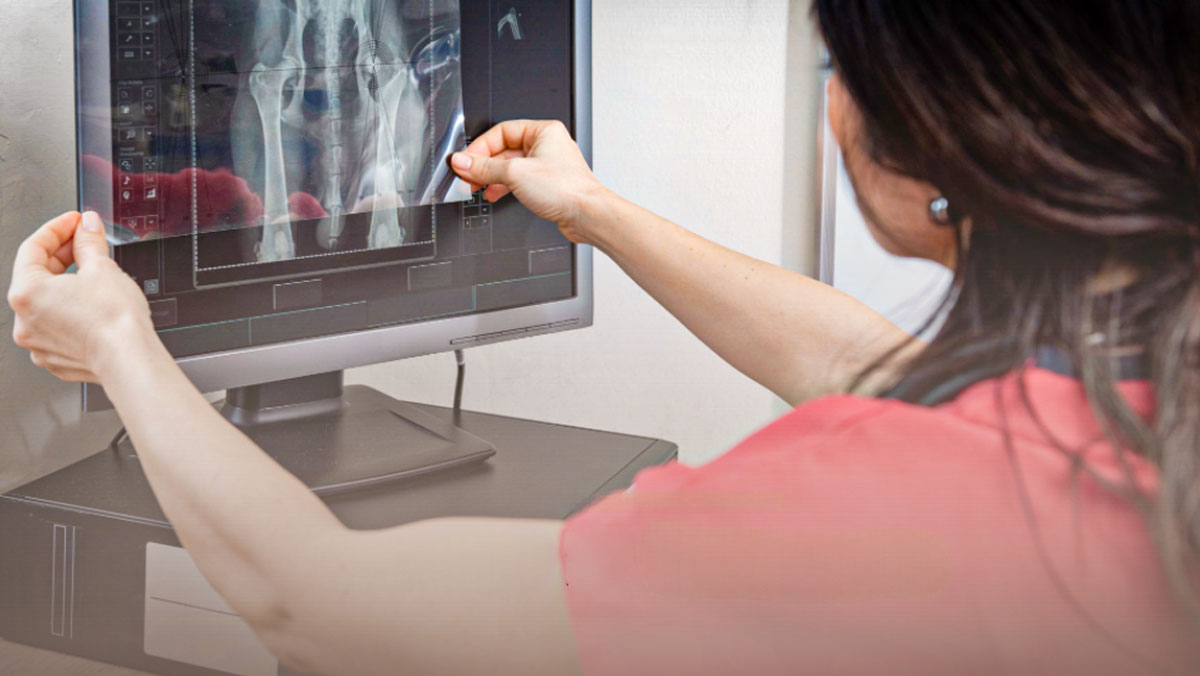
Plain X-Rays
X-rays may show:
Narrowed disc spaces
Mineralized disc material (calcified discs)
Spondylosis (bony changes)
However, plain radiographs cannot reliably visualize the spinal cord itself or non-calcified disc material. They are often insufficient on their own for surgical planning.
Advanced Imaging: The Standard of Care
In referral centers with diagnostic imaging capabilities, advanced techniques provide the definitive diagnosis:
| Modality | Strengths |
|---|---|
| MRI (magnetic resonance imaging) | Gold standard for visualizing the spinal cord, disc material, and soft tissues; excellent for detecting cord swelling, hemorrhage, and non-mineralized protrusions |
| CT (computed tomography) | Excellent for mineralized disc material; faster than MRI; often combined with contrast (CT myelography) |
| Myelography | Dye injection around the cord with radiographs; less commonly used where an MRI or CT scan is available |
Emergency Workflow in a 24-Hour Specialist Facility
Rapid triage and stabilization
Neurological grading
Sedation or anesthesia for MRI or CT
Interpretation by a radiologist and a surgeon/neurologist
Treatment plan—often within the same day or overnight
Blood tests and other screening are typically performed to assess anesthetic risk and rule out systemic disease before surgery.
Neurological Grading and Stages of IVDD
Veterinary neurologists use a grading system to categorize severity. This helps predict prognosis and guides treatment decisions.
The 5-Grade System
| Grade | Description |
|---|---|
| 1 | Pain only, no weakness or neurological deficits |
| 2 | Walking but wobbly (ambulatory paresis); conscious proprioceptive deficits present |
| 3 | Unable to walk but can move legs voluntarily (non-ambulatory paresis) |
| 4 | Unable to walk or stand, no voluntary movement, but still has deep pain sensation |
| 5 | No deep pain sensation in affected limbs and tail (most severe) |
Why Grading Matters
Helps predict prognosis
Guides decisions between conservative management and surgical intervention
Allows monitoring of improvement or deterioration over time
Enables clear communication between veterinary team and owners
Progression between grades can occur within hours to days. Re-examination is vital if IVDD symptoms worsen.
Loss of deep pain (Grade 5) is the most serious category. Even with emergency surgery, prognosis is guarded. Without surgery, the outlook is very poor.
Treatment Options: Conservative vs. Surgical Management
Treatment choice depends on several factors:
Neurological grade
Duration of signs
Imaging findings (degree and type of compression)
The dog’s overall health and age
Owner resources and goals
Conservative Management
Best suited for dogs with:
Pain only (Grade 1)
Mild weakness but still able to walk (Grade 2)
Key components:
| Element | Details |
|---|---|
| Strict crate rest | 4–6 weeks of cage rest with only controlled leash walks for elimination |
| Anti-inflammatory medications | NSAIDs or short courses of corticosteroids (never both together) |
| Pain control | Multimodal approach using various pain relievers and adjunct medications like gabapentin |
| Muscle relaxants | Sometimes added for muscle spasm |
| Close monitoring | Any deterioration prompts immediate re-evaluation and often advanced imaging |
Medications may temporarily improve pain, but they do not remove compressed disc material. They cannot by themselves resolve a major spinal cord compression.
Surgical Management
Indications for disc surgery include:
Moderate to severe weakness or paralysis (Grades 3–5), even if recent
Dogs whose pain or mild deficits do not improve or worsen despite 3–7 days of strict rest
Recurrent episodes that significantly interfere with quality of life
Severe pain unresponsive to conservative treatment
A specialist surgeon or neurologist will explain expected outcomes, potential complications, and costs to help owners make informed decisions.
What Does Spinal Surgery for IVDD Involve?
The Goal
Spinal surgery aims to:
Create a small window in the vertebral bone overlying the spinal cord
Remove extruded or bulging disc material
Relieve putting pressure on the spinal cord and improve blood flow
Common Decompressive Procedures
| Location | Procedure |
|---|---|
| Cervical (neck) | Ventral slot surgery—approach from under the neck |
| Thoracolumbar (mid-back) | Hemilaminectomy—removal of bone from one side of the vertebral column |
| Lumbosacral (lower back) | Dorsal laminectomy or other tailored procedures |
Fenestration
Fenestration involves removing the remaining nucleus pulposus through a small window in the disc space. It may be performed:
At the affected disc
At neighboring discs to reduce recurrence risk
This is a prophylactic measure—it does not treat already extruded disc material currently pressing on the cord.
Surgery Duration and Timing
Typical duration: 1–3 hours, depending on the number of discs and complexity
Performed under general anesthesia with advanced monitoring
In emergency cases, imaging and IVDD surgery are often completed on the same day or within 24 hours
Hospitalization, Immediate Post-Operative Care, and Pain Control
Post-Operative Course in a 24-Hour Hospital
After spinal surgery, dogs are managed in a specialized ward with:
Recovery in a quiet, temperature-controlled environment
One-to-one nursing care for critical cases
Continuous pain management using multimodal analgesia
Early Care Priorities
| Priority | Actions |
|---|---|
| Bladder management | Manual expression or catheterization if the dog cannot urinate voluntarily |
| Skin care | Prevention of bed sores and urine scalding |
| Positioning | Turning the dog regularly, using soft, clean bedding |
| Neurological monitoring | Regular checks to assess for improvement or complications |
Typical Hospital Stay
| Status | Expected Duration |
|---|---|
| Walking dogs with pain only | Often home within 24–48 hours |
| Non-ambulatory but improving | Usually 3–7 days, depending on bladder control and ability to sit/stand with assistance |
| Severely affected dogs | May require longer hospitalization for intensive nursing care |
Owners are usually invited to visit once the dog is stable. Familiar faces often help with motivation and emotional well-being.
Some degree of transient weakness or wobbliness after surgery is expected and is not necessarily a sign of failure.
Rehabilitation and Home Care After IVDD
Physical Rehabilitation Modalities
Physical therapy and rehabilitation significantly improve strength, coordination, and speed of recovery. Most dogs treated for IVDD benefit from a structured rehab program.
Common rehabilitation modalities include:
Passive range-of-motion exercises
Assisted standing and supported walking
Balance and proprioception exercises
Hydrotherapy (underwater treadmill)
Laser therapy
Neuromuscular electrical stimulation
Home Care Guidelines
| Requirement | Details |
|---|---|
| Strict leash control | No off-lead running initially |
| No jumping | Avoid furniture, cars, and stairs for several weeks. |
| Environmental modifications | Use ramps, harnesses, and non-slip flooring |
| Activity restriction | Gradually increase activity only as directed |
Follow-Up and Monitoring
2 weeks post-surgery: incision check, neurological assessment
6–8 weeks: progress evaluation, modification of rehab plan
Ongoing as needed for long-term management
Monitor at home for:
Swelling or discharge from the incision
Loss of appetite
Worsening weakness
Inability to urinate
Contact the hospital promptly if any of these occur.
Prognosis: What Outcome Can I Expect for My Dog?
Prognosis is primarily determined by:
Neurological grade at the time of treatment
Duration of severe compression before decompression
Location and extent of spinal cord injury on imaging
General Outcome Trends
| Presentation | Expected Outcome |
|---|---|
| Pain only or mild weakness | Very high likelihood of full or near-full recovery |
| Non-ambulatory, with deep pain present | Good to very good chance of walking again after timely surgery (80–90% in many series) |
| Deep pain absent for <24 hours | Guarded prognosis; a meaningful proportion can recover with emergency surgery |
| Deep pain absent for several days | Poor prognosis; high risk of permanent paralysis and progressive myelomalacia |
Important Considerations
Recovery is often slow, several weeks to months to reach maximum improvement
Small gains (toe movement, brief standing) are important milestones
Most dogs show maximum recovery by 3–6 months post-surgery
Possible Long-Term Issues
Even in successful cases, some dogs experience:
Mild persistent wobbliness or weakness
Reduced jumping ability
Occasional bladder or bowel urgency
When Walking Doesn’t Return
Many dogs adapt remarkably well to:
Well-fitted mobility carts
Tailored home environments
Attentive nursing care
A pet’s quality of life can still be excellent with dedicated owner support.
Risk of Recurrence and Long-Term Prevention Strategies
Understanding Recurrence Risk
Once a dog has had one IVDD episode, the remaining discs may also be degenerated. The lifetime risk of another episode is higher than average, particularly in Dachshunds and other predisposed breeds.
Fenestration of at-risk discs during surgery reduces—but does not eliminate—the chance of future herniation at those levels. Other spinal segments can still develop problems later.
Practical Lifestyle Advice
Strategies for prevention and management:
Maintain lean body condition to reduce mechanical load on the spine
Use ramps or steps to prevent jumping on/off furniture and into cars
Limit unsupervised jumping to reduce sudden stress on vulnerable discs
Provide non-slip flooring to prevent falls and awkward movements
Avoid rough play, especially on slippery surfaces
Genetic Testing
Where available, genetic testing can help:
Identify high-risk individuals for breeding decisions
Provide useful information, though it cannot guarantee whether a dog will or will not develop IVDD
Ongoing Vigilance
Routine veterinary check-ups are essential
Prompt evaluation of any new back or neck pain in previously affected dogs
Early intervention typically leads to better outcomes
Other Diseases That Can Mimic IVDD
A specialist will consider several differential diagnoses when evaluating a dog with suspected disc disease in dogs:
| Condition | Key Features |
|---|---|
| Spinal fractures/luxations | History of trauma; unstable spine on imaging |
| Spinal tumors | Progressive course; may affect older dogs; visible on MRI |
| Fibrocartilaginous embolism (FCE) | Sudden onset during activity; usually non-painful after initial hours; often asymmetric; no compressive lesion on MRI |
| Degenerative myelopathy | Slowly progressive over months; typically not painful; no effective cure; common in German Shepherd Dogs |
| Inflammatory/infectious diseases | Fever, systemic signs; abnormal CSF; includes discospondylitis and meningomyelitis |
Fibrocartilaginous Embolism (FCE)
Often called a “spinal stroke,” FCE causes:
Sudden onset, often during activity
Non-painful after the first few hours
Asymmetric weakness (one leg worse than the other)
No compressive disc material on MRI
Surgery is not helpful for FCE because there’s no compression to relieve.
Degenerative Myelopathy
This progressive spinal cord degeneration causes:
Slowly progressive hind limb weakness and ataxia over months
Usually in older large-breed dogs
Typically not painful
No effective cure, but supportive care and rehab can prolong quality of life
Avoid assuming “just a slipped disc” without appropriate veterinary evaluation. Missing another diagnosis can delay suitable treatment.
Advanced imaging (MRI/CT) is essential to distinguish conditions that may benefit from surgery from those where surgery would not help.
Living with a Dog After IVDD: Quality of Life and Owner Support
Realistic Long-Term Outcomes
Many dogs return to near-normal lives with only minor limitations
Some remain mildly disabled but adapt extremely well with owner support
Dogs are remarkably resilient and don’t dwell on what they can’t do
For Dogs with Residual Paralysis
| Need | Solution |
|---|---|
| Mobility | Well-fitted mobility carts |
| Bladder care | Manual expression techniques taught by veterinary nurses |
| Skin health | Prevention of pressure sores; maintaining hygiene |
| Activity | Modified play and exercise appropriate to abilities |
Owner Support Resources
Online support groups for IVDD (Facebook groups, breed-specific forums)
Local rehabilitation specialists
Veterinary social workers at some specialty hospitals
Maintaining Quality of Life
With careful management, most dogs with IVDD still enjoy:
Play and interaction with family
Companionship and affection
Mental stimulation and enrichment
A fulfilling life
Maintain ongoing communication with your primary vet and, when needed, your specialist surgeon/neurologist to adjust pain control, exercise, and home modifications over time.
FAQ: Degenerative Disc Disease (IVDD) in Dogs
How much does IVDD surgery typically cost?
Can my dog recover from IVDD without surgery?
Many dogs with pain only or mild weakness (still able to walk) can recover fully or almost fully with strict rest and appropriate medications. These dogs are typically managed with 4–6 weeks of cage rest, anti-inflammatories, and pain control. However, they carry an ongoing risk of recurrence.
Non-ambulatory dogs, or any dog that loses deep pain sensation, have a much better chance of walking again if treated surgically in a timely manner. Conservative management alone is rarely successful for severely affected dogs.
How much does IVDD surgery typically cost?
In the United States, MRI or CT imaging plus surgery and hospitalization at a 24-hour referral center typically range from $5,000 to $9,000 or more, depending on the hospital, geographic region, number of discs operated, and length of stay. Complex cases requiring extended hospitalization or multiple procedures will be at the higher end.
Always discuss written estimates, payment options, and pet insurance coverage with your veterinary team before proceeding. Many hospitals offer payment plans or work with veterinary financing companies.
Is IVDD painful for my dog?
Disc disease is often very painful, especially cervical IVDD affecting the neck. Untreated pain seriously impacts quality of life and can cause behavior changes, loss of appetite, and distress.
Modern multimodal analgesia in a specialist hospital—including opioids, anti-inflammatories, and adjunct medications—is highly effective. Both medical and surgical patients can usually be kept comfortable throughout treatment. Pain management is a top priority in IVDD care.
Will my dog be normal again after IVDD?
Many dogs, especially those treated before severe spinal cord injury occurs, go on to live essentially normal lives with minor or no visible deficits. They can run, play, and enjoy all their normal activities.
Some dogs will retain mild wobbliness or reduced jumping ability even after successful treatment. A small proportion will remain unable to walk independently despite optimal care. These dogs can still enjoy life with mobility carts, environmental modifications, and skilled nursing care from dedicated owners.
Can I do anything to prevent IVDD in my at-risk breed?
While you cannot fully prevent genetically driven IVDD, you can lower overall risk through several strategies:
Keep your dog lean to reduce spinal loading
Use ramps to minimize jumping on and off furniture
Provide good traction (non-slip flooring) throughout your home
Avoid rough, high-impact play
Consider using a harness instead of a collar for neck-sensitive breeds
Discuss breeding choices, genetic testing where available, and early screening for subtle signs with your family veterinarian if you have a high-risk breed.
What are some post-surgical care tips for dogs recovering from IVDD?
Strict crate rest as directed by your veterinarian
Controlled leash walks only for elimination
Prevent jumping on/off furniture or stairs
Use ramps and non-slip flooring at home
Monitor the incision for swelling or discharge
Watch for loss of appetite or worsening weakness
Attend all follow-up appointments and rehabilitation sessions
Contact your veterinary team promptly if you notice any concerning changes